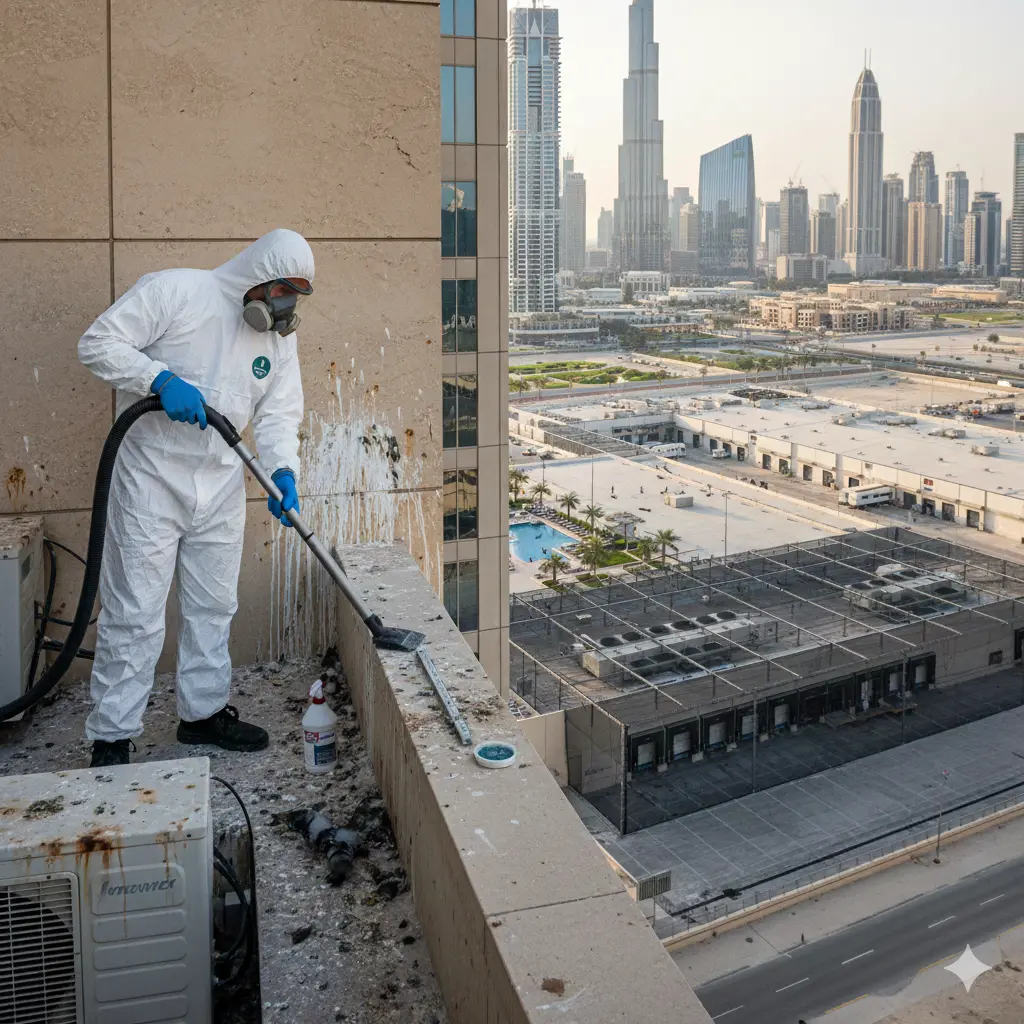
The dazzling urban sprawl of Dubai is a magnet for businesses, residents, and tourists alike. Yet, amidst the towering skyscrapers and manicured landscapes, an often-overlooked challenge persists: the proliferation of the Dubai pigeon. These common birds, while seemingly harmless, pose significant, costly, and continuous threats to property, public health, and the city’s meticulously maintained aesthetic.
This comprehensive guide, brought to you by the specialists at Bird Control Dubai, delves deep into the multifaceted problem of pigeon infestation. We will explore the specific reasons why Dubai’s environment is an ideal habitat, detail the extensive damage they cause, and outline the advanced, professional solutions required to manage the issue effectively and permanently.
Understanding the ‘Dubai Pigeon’ Phenomenon
Pigeons thrive in urban environments, and the architecture and climate of the UAE make Dubai a near-perfect sanctuary for them. A long-term control strategy must first acknowledge why these birds are so persistent here.
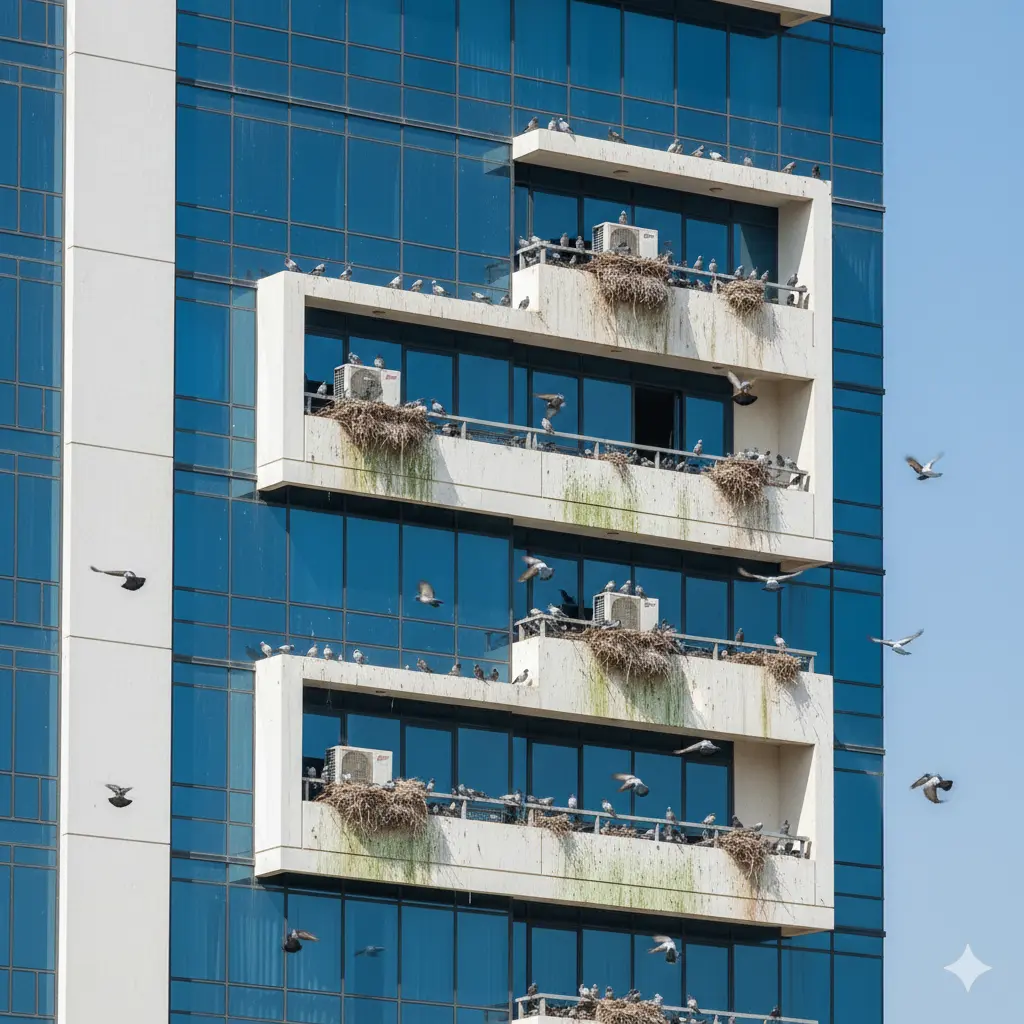
1. The Architecture of Attraction
Dubai’s cityscape is dominated by high-rise towers, vast commercial complexes, and intricate public spaces—all offering ideal places for pigeons to roost, nest, and breed.
- Ledges and Sills: The aesthetic design of modern buildings often features numerous ledges, parapet walls, and windowsills. These provide protected, high-altitude perches away from ground predators, which pigeons instinctively seek out.
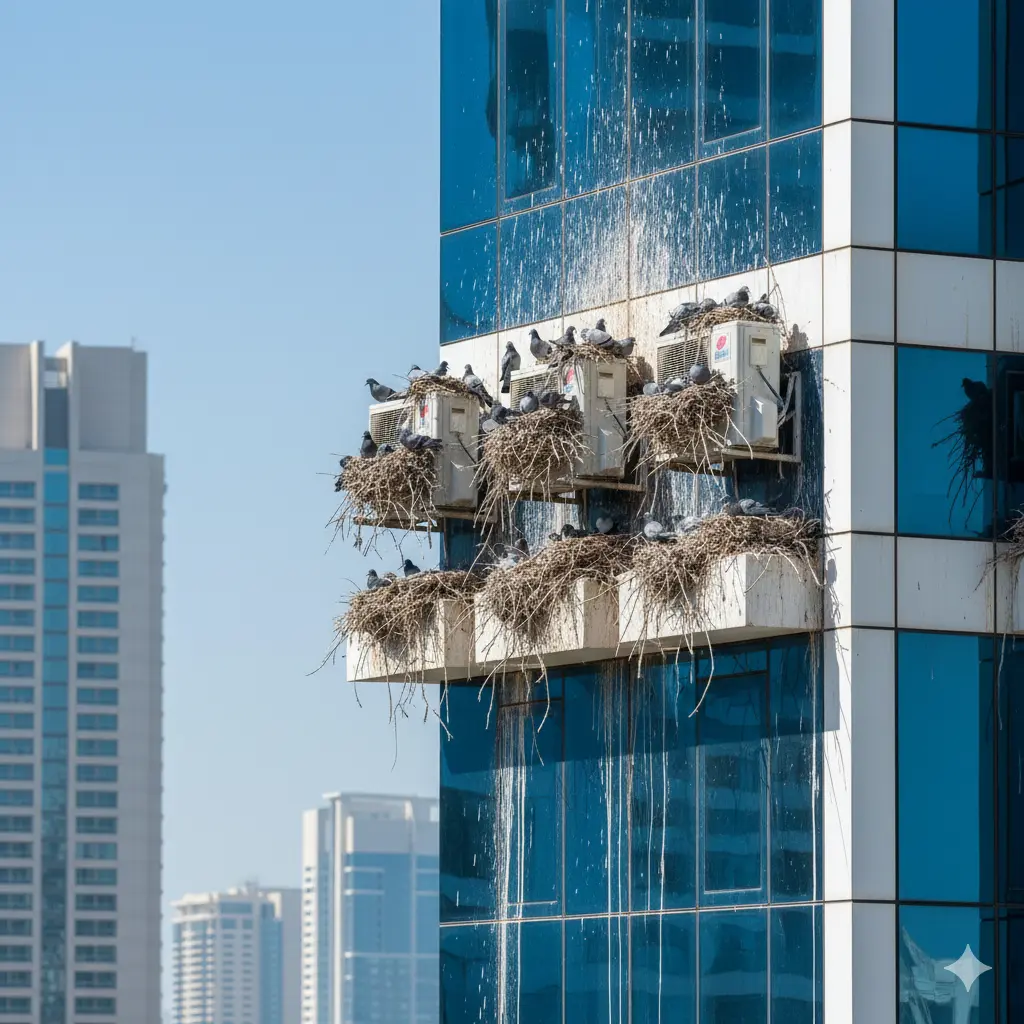
- Air Conditioning (HVAC) Units: AC units on balconies and rooftops offer a trifecta of benefits: shelter from the sun, a source of (or collection point for) water, and a safe, hidden spot to build a nest. The warmth generated by the machinery can also aid in breeding.
- Roofs and Mechanical Areas: Unused rooftop spaces, particularly those housing large satellite dishes or maintenance machinery, offer vast, undisturbed areas for large pigeon colonies to establish long-term residency.
2. The Climate and Resources
The local environment accelerates the pigeon problem in ways that colder climates do not.
- Continuous Breeding: Unlike birds in seasonal climates, pigeons in Dubai’s consistently warm weather can breed year-round, leading to a much faster population increase. A pair of pigeons can produce up to six broods per year.
- Abundant Food Sources: Pigeons are scavengers. Open dumpsters, food scraps left at outdoor dining areas, and well-meaning but misguided public feeding provide a constant, reliable source of sustenance. Without food stress, their populations grow unchecked.
- Water Availability: From decorative fountains and irrigation systems to air conditioning condensate, water is readily available, allowing large flocks to sustain themselves comfortably.
The Three Pillars of Pigeon Damage
The impact of a Dubai pigeon infestation extends far beyond mere annoyance. Professional bird control is a necessity because of the significant harm pigeons cause across three critical areas: structural, health, and commercial.
1. Structural and Aesthetic Damage (The Cost Factor)
Pigeon droppings, known as guano, are highly acidic due to their concentrated uric acid content. This is the primary driver of property damage.
- Corrosion of Building Materials: Guano eats away at paint, stone, marble, concrete, and roofing tiles. On metal structures, it accelerates the rusting and corrosion of steel and aluminum. In high-value commercial buildings with intricate facades, the permanent etching caused by droppings leads to massive refurbishment costs.
- Blocked Drainage Systems: Nesting materials—twigs, feathers, and solidified droppings—are frequently washed into gutters and downpipes. Blockages can lead to overflowing water, internal leaks, roof damage, and structural compromise, especially during heavy rainfall.
- HVAC System Malfunction: Nests built within air vents or around condensers can block airflow, causing units to overheat, reduce efficiency, and potentially lead to costly mechanical failure or fire hazards. The sheer weight of large, wet nests can also damage roof membranes.
2. Public Health and Hygiene Risks (The Safety Factor)
Pigeons are carriers for numerous pathogens and parasites, making contact with droppings or nesting areas a genuine health hazard for residents and workers.
| Health Hazard | Associated Pigeon Risk | Impact on Humans |
| Histoplasmosis | Fungal spores thrive in dried droppings. | Severe respiratory illness, particularly dangerous for the immunocompromised. |
| Cryptococcosis | Yeast/fungus found in old droppings. | A systemic disease that affects the lungs and can spread to the nervous system. |
| Psittacosis | Bacterial disease transmitted via inhalation of dried droppings or feathers. | Flu-like symptoms, fever, and pneumonia. |
| Salmonella | Found on surfaces contaminated by droppings. | Transmitted through contamination of food or water sources. |
| Bird Mites & Ticks | Parasites living in nests and on the birds. | Mites can spread into apartments and offices, causing skin irritation, itching, and requiring secondary pest control. |
Furthermore, accumulated droppings create an extreme slip-and-fall hazard on walkways, balconies, and entry points, creating liability risks for building management.
3. Commercial and Reputational Damage (The Business Factor)
For Dubai’s hotels, restaurants, and retail centres, a pigeon problem directly impacts the bottom line.
- Negative Customer Experience: Nothing ruins the luxury perception of a high-end hotel or restaurant faster than visible pigeon droppings on terraces, signage, or entrances. This results in negative reviews and loss of business.
- Compliance Issues: Food-handling facilities face strict health and safety regulations. A pigeon infestation can lead to fines, temporary closures, and reputation-damaging violations from the local municipality.
- Maintenance Downtime: Constant cleanup, repair of damaged equipment, and the installation of ineffective DIY deterrents consume significant facility management time and budget that could be better allocated elsewhere.
Why DIY Methods Are Ineffective for the Dubai Pigeon
Many property owners first attempt quick, cheap fixes to deter pigeons. However, in an urban environment like Dubai, these methods consistently fail to provide a long-term solution.
1. The Shortcomings of Amateur Solutions
- Sonic Repellents: Pigeons quickly become habituated to non-threatening, constant noise. They learn the sound poses no real danger and simply ignore it.
- Visual Deterrents (Fake Owls, CDs): Birds are intelligent. After a short period, they realize the decoy is stationary and non-threatening. Furthermore, intense sunlight in Dubai can quickly fade or damage reflective materials, reducing their short-term effectiveness to zero.
- Chemical/Gel Repellents: These sticky substances are often inhumane and temporary. The gels degrade quickly in the intense Dubai heat, becoming ineffective, and they can sometimes collect dust and dirt, eventually creating a new nesting surface.
2. The Need for Professional Expertise
A professional bird control company, like Bird Control Dubai, doesn’t just treat the symptom; we diagnose the underlying cause and implement a layered, strategic defense. Our approach is effective because it is:
- Targeted: Solutions are tailored to the specific bird species, the building’s architecture, and the severity of the infestation.
- Humane and Legal: All methods comply with local UAE regulations, focusing on exclusion and deterrents without harming the birds.
- Durable: Materials are high-grade, UV-stabilised, and designed to withstand the harsh heat and humidity of the desert environment for years, not months.
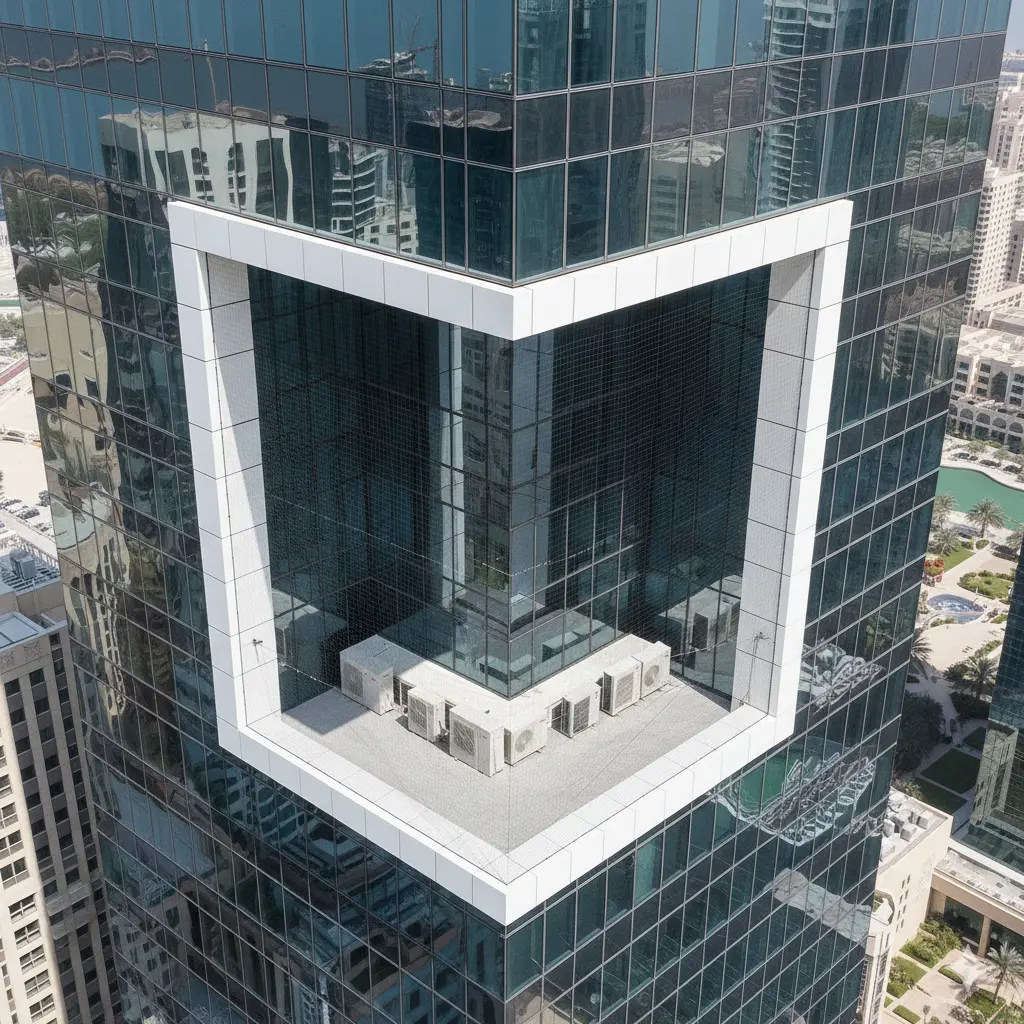
Professional Pigeon Control Solutions in Dubai
Effective, long-term pigeon control relies on a combination of exclusion (blocking access) and deterrence (making the area undesirable). We employ only the most proven, high-quality, and discreet systems.
1. Exclusion Solutions (The Physical Barrier)
These methods create a physical wall that prevents pigeons from landing or entering an area. They offer the highest rate of long-term success.
- Heavy-Duty Bird Netting:
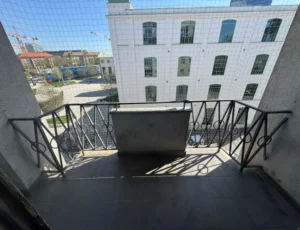
- Application: Ideal for large, open areas such as balconies, terraces, courtyards, warehouses, loading bays, and building recesses.
- Mechanism: A virtually invisible, high-tension net (often polyethylene) creates an impenetrable barrier, denying access to entire sections of a property. Our nets are custom-cut and installed with industrial-grade fixing systems to ensure zero gaps.
- Bird Spiking Systems:
- Application: Used for narrow ledges, window sills, parapet walls, lighting fixtures, and signage.
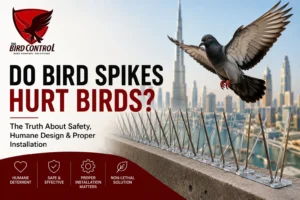
- Mechanism: Stainless steel or polycarbonate spike strips are fixed to perching surfaces. They are designed to prevent the bird from landing comfortably, forcing them to move elsewhere, but are not sharp and cause no harm.
2. Deterrent and Repellent Systems (Making the Perch Unattractive)
These methods use discomfort or harmless electric sensation to dissuade birds from landing.
- Bird Wire/Post & Wire Systems:
- Application: Best for long, straight, exposed ledges where aesthetics are critical.
- Mechanism: Thin, stainless steel wires are tightly strung between small, discreetly placed posts along the ledge. This creates an unstable landing surface that pigeons find unreliable and uncomfortable, forcing them to look for an alternative perch.
- Electric Shock Track Systems:
- Application: High-visibility areas like historical buildings, facades, and commercial storefronts where aesthetics are paramount.
- Mechanism: A low-profile, flexible track is placed on the ledge. When a pigeon lands, it receives a very mild, harmless electric pulse (similar to a static shock). This teaches the bird that the location is unsafe, and they quickly relocate. These systems are nearly invisible from the ground.
- Optical Bird Gel Repellents (New Generation):
- Application: Discreet application on small perching spots.
- Mechanism: These gels are not merely sticky. They contain optical ingredients that, to a bird’s eye, look like fire or smoke, creating an illusory danger that they instinctively avoid.
3. Falconry as a Natural Deterrent
In certain high-profile or large-scale commercial settings, traditional falconry is employed.
- Mechanism: Trained falcons are flown around the target area at predetermined intervals. The presence of a natural predator causes the pigeon flock to scatter and signals to them that the area is a high-risk feeding/roosting zone. This is a highly effective, natural, and respected method in the UAE.
The Essential First Step: Professional Cleanup and Bio-Hazard Removal
Before any control measures can be installed, the contaminated area must be professionally cleaned and sanitised. This step is non-negotiable for two reasons: health and effectiveness.
1. Why a Specialist Cleanup is Required
DIY cleaning is hazardous and rarely effective. Attempting to sweep or hose down dried guano releases fungal spores into the air, creating a respiratory risk for anyone nearby.
- Containment: Our technicians use specialised HEPA-filtered vacuums and methods to safely contain and remove all nesting materials and droppings without aerosolising pathogens.
- Disinfection: After removal, the area is treated with an industrial-grade biocide to kill bacteria, viruses, and parasitic organisms left behind. This is crucial for protecting the health of residents, employees, and maintenance staff.
- Pest Treatment: The cleanup process includes treating the area for secondary infestations, such as bird mites, that may have migrated from the nest into the property.
2. Importance for Long-Term Control
Pigeons are highly social and are attracted by the scent and sight of old nesting sites. A thorough professional cleanup eliminates the biological markers that signal to other pigeons that the area is a safe, established roosting location, thereby maximizing the effectiveness of the installed deterrent system.
Long-Term Prevention and Maintenance
Once your property is secured, sustained success depends on simple, consistent preventive measures. Bird Control Dubai offers comprehensive maintenance and advice to keep your investment protected.
1. Management Best Practices
- Eliminate Food and Water Sources: This is the single most effective long-term measure. Secure all outdoor bins with tight-fitting lids. Avoid leaving pet food or water outside. If you notice public feeding near your property, engage with management or local authorities.
- Seal Entry Points: Regularly inspect the building for small openings—broken vents, unsecured eaves, or gaps under roofing—that are large enough for a bird to enter and establish a nest inside the structure.
- Routine Inspection and Maintenance: Even the most robust bird control systems can be compromised by severe weather or external interference. Schedule regular professional checks to ensure nets are taut, spikes are intact, and deterrent systems are functioning optimally.
2. Partner with Bird Control Dubai
Choosing a local expert means partnering with a company that understands the specific challenges of pest control in the UAE, including local bird species, weather-resistant materials, and regulatory compliance.
Our commitment is to provide discrete, humane, and guaranteed solutions that safeguard the value, health, and beauty of your residential, commercial, or industrial property against the pervasive challenge of the Dubai pigeon.
📞 Take Control of Your Property Today
Don’t wait for minor droppings to turn into a major structural and health crisis. Protect your property with the industry-leading solutions from Bird Control Dubai.
Contact us now for a comprehensive site assessment and a tailored, long-term solution.