Updated August 2026
Ever been dive-bombed on the street for no reason? In Dubai, that’s very likely a Common Myna — not a pigeon. Unlike pigeons, which mostly just make a mess, Common Mynas (Acridotheres tristis) are territorial, loud, and genuinely aggressive near their nests, and Dubai’s mix of malls, signage, rooftops, and roadside trees gives them endless places to settle in.
This guide explains why common mynas are such a persistent problem in Dubai, what makes them different from pigeons and crows, and the proven myna control methods that actually work on a bird this smart and territorial.
Why Common Mynas Thrive in Dubai
Mynas are not native to the UAE — they were introduced decades ago and have since become one of the most successful urban birds in the city. A few things make Dubai especially attractive to them:
- Cavity nesting — mynas nest in roof voids, drainpipes, gutters, streetlight housings, and gaps behind signage, all of which are everywhere on Dubai’s commercial buildings.
- Communal roosting — in the non-breeding season, mynas gather in large group roosts in big trees and building ledges, sometimes numbering in the thousands at a single site.
- Opportunistic feeding — mynas eat almost anything: food scraps, pet food, insects, fruit, and market waste, making shopping areas, food courts, and parking lots prime feeding zones.
- Breeding season aggression — myna breeding runs roughly from August through March, and pairs defend the same nesting territory year after year, which is when attacks on people near nests spike.
The Real Problem: Mynas Are Aggressive, Not Just Messy
This is what separates myna control from pigeon control — mynas will actively defend their nests against people, not just birds. Dubai has documented real cases of this. In a widely reported 2018 Gulf News investigation, mynas nesting near a bank facade on Sheikh Zayed Road repeatedly dive-bombed pedestrians — mostly women and smaller individuals — swooping down and striking at people’s heads as they walked past. While that specific case is several years old, the underlying behavior pattern hasn’t changed — it’s a documented, real illustration of how mynas react to nesting sites near foot traffic.
A wildlife specialist from Dubai Municipality’s Public Parks and Horticulture Department commented at the time that mynas typically only attack when a nest is nearby or when they perceive a food threat, and that the fix is straightforward: locate and remove the nest, then seal the cavity so the birds can’t reoccupy it. Left alone, a nesting pair will return to the same spot and defend it aggressively every season.
Beyond the safety issue, mynas also cause:
- Corrosive droppings that damage facades, signage, and vehicles parked beneath roosts
- Noise complaints, especially from large evening roosts near residential buildings
- Blocked gutters and drainpipes from nesting material
- Displacement of other bird species, since mynas aggressively evict competitors from nesting cavities

Common Myna Control & Prevention Methods
Because mynas are cavity nesters and highly territorial, generic deterrents alone rarely solve the problem — the nest itself has to be addressed.
1. Locate & Remove Active Nests
The single most effective step. Mynas nest in roof voids, drainpipes, AC housings, gutters, and gaps behind signage — these need to be inspected and cleared, ideally before the August–March breeding season begins.
2. Seal Nesting Cavities
Once a nest is removed, the entry point must be sealed or screened immediately. If the cavity is left open, the same pair — or a new one — will simply move back in.
3. Bird Netting for Roosting Areas
For large communal roost sites (big trees, courtyards, parking structures), bird netting prevents birds from accessing the roosting area at all — the most reliable long-term fix for high-density sites.
4. Bird Spikes on Ledges & Signage
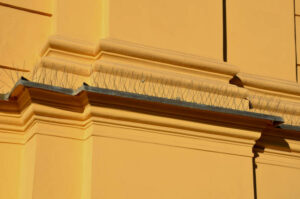
Mynas frequently perch on signage, ledges, and rooftop edges before entering a cavity to nest. Bird spikes on these approach points reduce nesting attempts significantly when combined with cavity sealing.
5. Waste & Food Source Management
Since mynas are opportunistic scavengers, keeping food courts, bins, and outdoor seating areas free of exposed scraps reduces the food incentive that draws large numbers to a property in the first place.
Where Myna Activity Is Confirmed Highest in Dubai
Common mynas cluster wherever there’s a combination of mature trees, gardens, and nearby food access — and a handful of Dubai areas stand out consistently, both in resident reports and in service coverage from local bird control providers:
- Arabian Ranches — mature landscaping and private gardens make this one of the most consistently reported villa communities for bird nesting activity, mynas included.
- Mirdif — a long-established villa district with dense tree cover; regularly listed by bird control providers as a recurring service area for nesting and roosting issues.
- Al Barsha — mixed villa and low-rise district with significant green space, frequently serviced for bird nesting problems.
- Palm Jumeirah & Jumeirah — high-value villa communities where providers report handling nesting issues in balconies, roof edges, and AC units on a regular basis.
- Sheikh Zayed Road — while not a residential area, this corridor has a documented history of aggressive myna behavior: in a widely reported case, mynas nesting near a bank facade repeatedly dive-bombed pedestrians. It’s a useful reminder that mynas nest wherever mature trees or building ledges meet foot traffic — not just in villa communities.
A note on scope: myna activity almost certainly extends beyond these five areas — but these are the ones we can currently back with real reporting or documented service data rather than a general assumption. If you’re seeing myna activity in a different area of Dubai, the same underlying pattern applies: mature trees or garden space, plus an accessible nesting cavity nearby.
What Draws Mynas to a Property, Regardless of Area
No matter the district, the same features consistently attract mynas:
- Trees and landscaped gardens
- Villa communities with private green space
- Parks and playgrounds
- Restaurants and cafés (food access)
- Schools and shopping areas
- Building cavities and roof spaces suitable for nesting
If your property sits in a villa community with mature trees, expect the highest activity. Either way, activity increases heading into the August–March breeding season.
What It Costs: Myna Control in Dubai
| Method | Best For | Notes |
|---|---|---|
| Nest removal + cavity sealing | Roof voids, signage gaps, drainpipes | Most effective single step; timing matters |
| Bird spikes | Ledges, signage edges, rooftop perimeters | Reduces perching before nesting attempts |
| Bird netting | Large trees, courtyards, parking structures | Best for communal roost sites |
| Combined program | Malls, commercial buildings, residential compounds | Recommended where attacks or large roosts are reported |
For an exact quote based on your property, contact Bird Control Dubai for a free inspection.
Frequently Asked Questions
Why do common mynas attack people in Dubai? Common mynas attack people almost exclusively when a nest is nearby or they perceive a food threat, and they tend to target smaller individuals such as women and children. This behavior peaks during the breeding season (roughly August to March), when nesting pairs aggressively defend their territory. The fix is to locate and remove the nest and seal the cavity so the birds cannot return to the same spot.
How are mynas different from pigeons when it comes to bird control? Pigeons mostly cause mess through droppings and roosting, while mynas are cavity nesters that hide inside roof voids, drainpipes, and signage gaps — and they can become physically aggressive toward people near an active nest. This means myna control usually requires locating and sealing a specific cavity, not just installing spikes or netting on open surfaces.
When is myna breeding season in Dubai? Common mynas generally breed from August through March, during which nesting pairs are most territorial and most likely to dive-bomb passersby. This is also the best window to prioritize nest removal and cavity sealing before eggs are laid.
Do bird spikes stop mynas from nesting? Bird spikes help prevent mynas from perching on ledges and signage before they enter a nesting cavity, but they don’t address an existing nest inside a roof void or drainpipe. The most effective approach combines spikes on approach points with nest removal and cavity sealing.
Why do villa communities like Arabian Ranches, Mirdif, and Al Barsha have more mynas? Common mynas nest in cavities and prefer quiet, tree-covered spaces near a reliable food source — exactly what these villa communities provide with their mature trees, private gardens, and low-disturbance green space. This pattern is consistent with what local bird control providers report servicing regularly in these areas.
How much does myna control cost in Dubai? Cost depends on how many nesting sites are involved, whether sealing and netting are required, and the size of the property. Request a free inspection for an accurate quote.
Related Guides
- Common Birds in Dubai
- House Crow Control in Deira, Dubai
- Bird Control in Dubai — Full Service Overview
- Bird Netting Solutions
- Bird Spikes in Dubai
This guide is reviewed and updated periodically to reflect current bird behavior patterns and Dubai conditions. Last reviewed: August 2026.